Journey into the ancient forest groves, nocturnal rituals, and sacred traditions behind India's golden nectar.
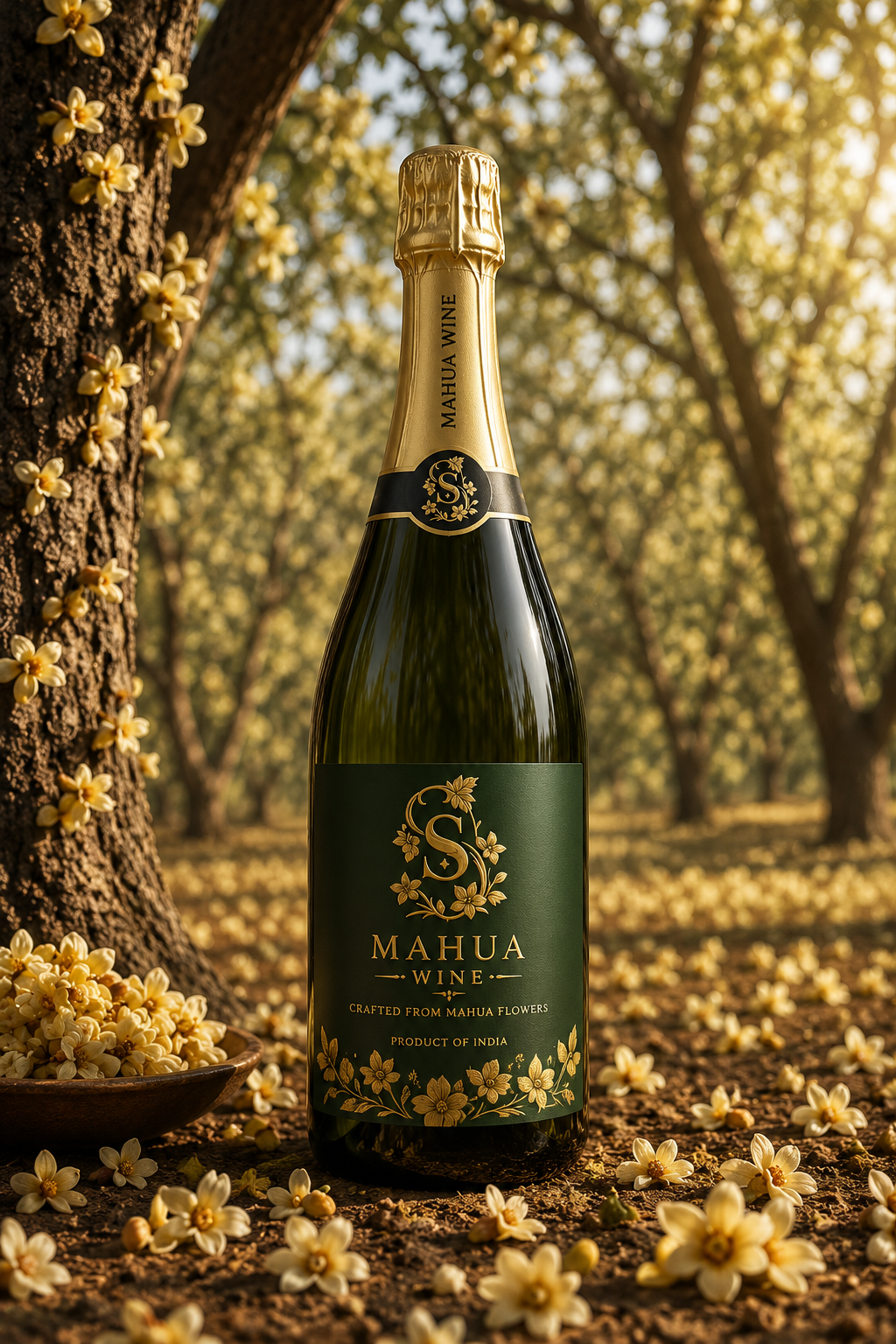
When the hot spring winds sweep across the tiger reserves of Madhya Pradesh and Chhattisgarh, the forest canopy transforms. At dusk, the Mahua trees release an intoxicating sweet fragrance reminiscent of ripe peaches, cardamom, and warm acacia honey.
Under the midnight moonlight, millions of succulent yellow petals loosen from their stems and fall silently onto swept earthen mats. Tribal families light small fires of aromatic sal wood to keep forest wildlife at bay while singing ancestral songs of gratitude to Kalo Devta, the forest deity.
Historical texts like the Manasollasa document Mahua wine (known as Madhvasava) as a cherished royal beverage served in golden goblets at royal feasts across ancient Indian kingdoms.
British colonial authorities outlawed native Mahua fermentation to enforce state monopolies on imported spirits. Tribal communities quietly preserved the sacred winemaking knowledge inside deep forest stills.
A team of master French winemakers and Indian botanists partner with forest tribes to study the secondary fermentation properties of Mahua nectar, crafting the first Méthode Traditionnelle prototype.
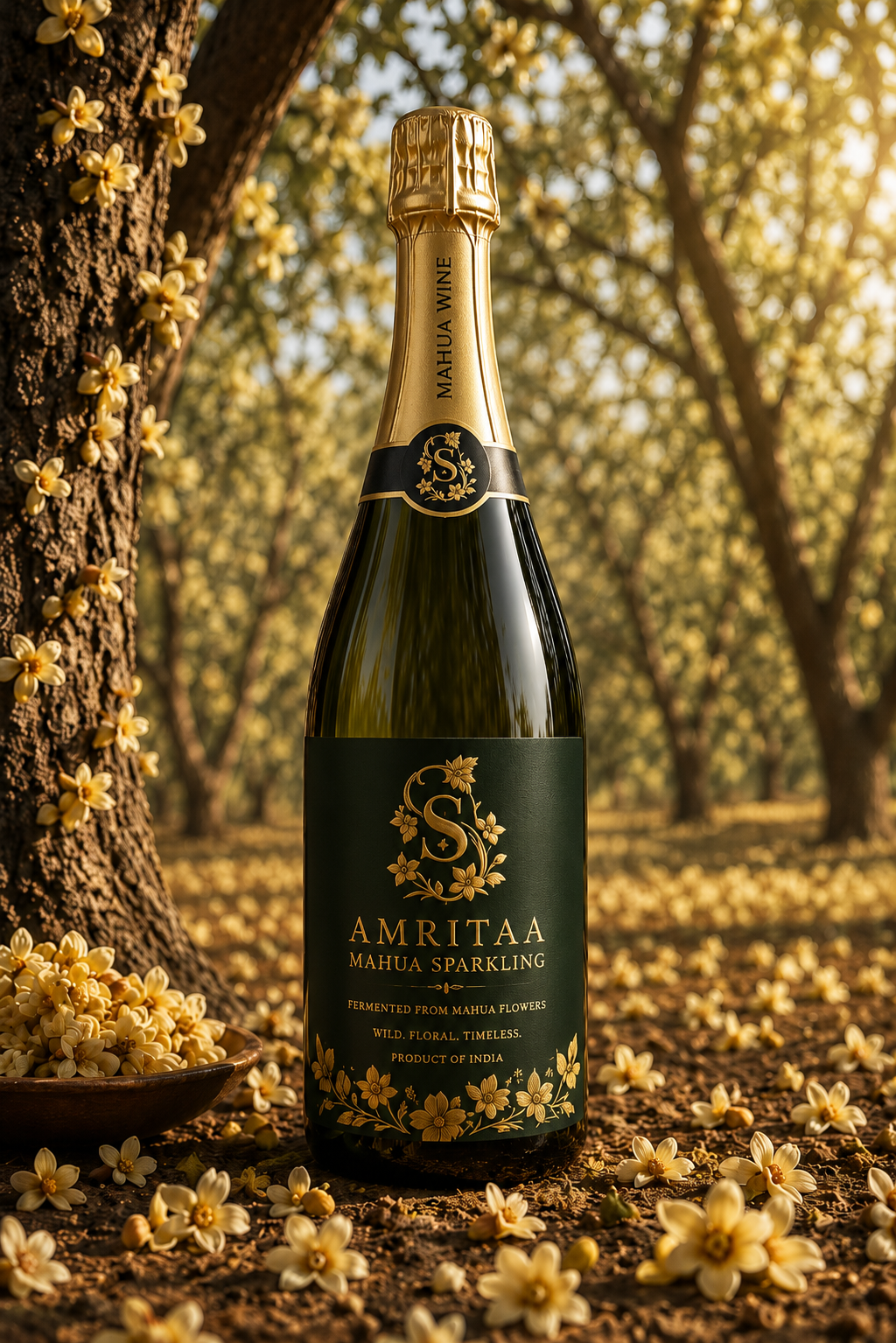
Amritaa wins Grand Gold at Paris Spirits & Wine Expo, establishing Mahua sparkling wine on Michelin-starred menus across Paris, London, Tokyo, and Mumbai.